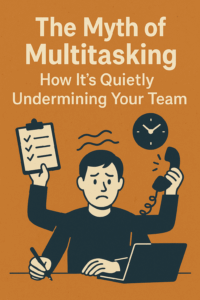

High achievement and success often come with an unspoken price tag. While outwardly projecting capability and control, many high performers secretly battle exhaustion, disengagement, and diminishing returns on their considerable efforts. What makes this particularly dangerous is that the warning signs of impending burnout in high-achievers often masquerade as badges of honor or necessary sacrifices for success.
This invisible pattern creates a perfect storm: those most vulnerable to burnout are frequently the least likely to recognize it developing—until they’ve already crashed. Understanding the hidden triggers and subtle warning signs specific to high-achieving personalities creates an opportunity to intercept burnout before it exacts its full toll on health, relationships, and long-term performance.
The Unique Burnout Pattern in High-Achievers
Burnout doesn’t affect all professionals equally. Research indicates that high-achievers experience a distinctive pattern with several key differentiators.
Why Traditional Burnout Signs Often Miss the Mark
The standard burnout indicators—obvious exhaustion, cynicism, and reduced productivity—typically emerge relatively late in high-performers. According to research published in the Journal of Applied Psychology, high-achievers demonstrate remarkable capacity to maintain external performance metrics even as their internal resources deplete.
By the time traditional burnout signs become evident, these individuals have often been operating in a compromised state for months or even years, masking their struggle through sheer determination and compensatory strategies.
The Achiever’s Neurological Vulnerability
Neurochemically, high-achievers often demonstrate what researchers call a “reward sensitivity bias”—a heightened responsiveness to achievement-related dopamine release coupled with reduced sensitivity to warning signals.
Studies from the Center for Healthy Minds show that this neurological profile creates a perfect storm: high-achievers experience more intense gratification from accomplishment while simultaneously having dampened responses to the body’s stress warning systems. This biological reality helps explain why many report they “never saw it coming” despite clear warning signs in retrospect.
The Science Behind High-Achiever Burnout
Understanding the physiological mechanisms helps explain why certain hidden triggers prove particularly dangerous.
The Allostatic Load Connection
Allostatic load—the cumulative physiological toll of chronic stress—builds differently in high-achievers. Research from Yale School of Medicine demonstrates that sustained cortisol elevation gradually damages the hippocampus, which plays a crucial role in stress regulation.
This creates a dangerous feedback loop: as stress regulation capacity diminishes, the individual becomes increasingly vulnerable to stressors, yet their achievement orientation often drives them to take on additional challenges rather than step back.
The Autonomic Nervous System Imbalance
High-achievers frequently demonstrate autonomic nervous system imbalances, with chronic sympathetic activation (fight-or-flight mode) and insufficient parasympathetic recovery (rest-and-digest mode).
A Stanford Medicine study found that participants with achievement-oriented personalities spent up to 70% less time in parasympathetic-dominant states compared to matched controls—even during supposed rest periods.
Hidden Trigger #1: Achievement as Identity
Perhaps the most fundamental burnout trigger for high-achievers is the integration of achievement into core identity.
When “Doing” Becomes “Being”
When accomplishment becomes the primary source of self-worth, the natural fluctuations in productivity that all humans experience become existential threats rather than normal variations.
As organizational psychologist Adam Grant notes in his research on achievement motivation, “When your identity is fused with your work, professional setbacks become personal failures.” This mindset transformation turns normal workplace challenges into potential identity crises, dramatically amplifying their psychological impact.
The Validation Treadmill
High-achievers often develop what psychologists call “contingent self-worth”—tying their value to external validation and achievement. Research from the Journal of Personality and Social Psychology demonstrates that contingent self-worth creates a perpetual treadmill effect: each achievement provides only temporary satisfaction before requiring another success to maintain self-regard.
This pattern prevents true recovery, as any pause in achievement threatens self-concept. The hidden danger emerges when external recognition becomes necessary not just for success but for basic psychological stability.
Hidden Trigger #2: Covert Rest Resistance
While many high-achievers acknowledge the theoretical importance of rest, their behavior often reveals deep-seated resistance to genuine recovery.
The Productivity Paradox
What appears as dedicated work ethic often masks a fundamental misunderstanding of how performance actually works. Research from the Harvard Business Review reveals that many high-performers mistakenly equate hours worked with output value, despite extensive evidence that performance diminishes dramatically beyond certain thresholds.
This creates a productivity paradox: working longer hours to accomplish more ultimately reduces both quantity and quality of output, yet the high-achiever often responds to this drop by working even more hours.
Recovery Resistance as Status Symbol
In many high-achievement cultures, rest avoidance functions as a status signal. As researcher Brené Brown has documented, “exhaustion as a status symbol” pervades many professional environments, creating social reinforcement for burnout-inducing behaviors.
The hidden trigger emerges when rest itself becomes psychologically threatening—when taking necessary recovery time triggers anxiety, guilt, or feelings of inadequacy. This emotional resistance to recovery prevents the essential restoration needed to maintain long-term performance.
Hidden Trigger #3: Cognitive Perfectionism
While perfectionism’s dangers are well-documented, high-achievers often experience a subtle variant that evades detection and intervention.
The Mental Standard Gap
Cognitive perfectionism manifests not just in visible standards for output but in invisible standards for mental performance. Research from the American Psychological Association shows that high-achievers often expect their thinking to be consistently clear, focused, and optimal.
The hidden trigger activates when natural cognitive fluctuations—which all humans experience—become interpreted as personal failings rather than normal brain function. This creates additional stress precisely when cognitive resources are already depleted.
The Metacognitive Trap
High-achievers frequently engage in extensive metacognition—thinking about their thinking. While this capability drives excellence in many contexts, it becomes problematic when turned against oneself during stress periods.
A University of Michigan study found that achievement-oriented individuals spent 3.2 times longer ruminating about perceived cognitive failures than peers, creating a secondary stress response that compounds the primary stressor.
Warning Signs: The Body’s Alarm System
Before full burnout manifests, the body typically sends escalating signals that high-achievers are particularly prone to override or misinterpret.
Physical Warning Signs Often Misattributed
Research published in the Journal of Psychosomatic Research identifies several physical warning signs that high-achievers frequently misattribute:
- Sleep disruption: Particularly difficulty falling asleep despite exhaustion
- Persistent muscle tension: Especially in the neck, shoulders, and jaw
- Digestion changes: Including appetite fluctuations or digestive discomfort
- Energy crashes: Particularly mid-afternoon energy collapse
- Immune suppression: Increased frequency of minor illnesses
The danger emerges when these symptoms are labeled as inconveniences to push through rather than important warning signals requiring response.
Emotional and Cognitive Warning Signs
Subtle emotional and cognitive changes often precede visible burnout:
- Diminished enthusiasm: Tasks that once generated excitement now feel mechanical
- Cognitive narrowing: Decreased ability to see multiple perspectives or creative solutions
- Memory lapses: Particularly for conversations or commitments
- Irritability threshold changes: Being triggered by minor frustrations
- Reduced recovery rate: Taking longer to “bounce back” from challenges
As executive coach Meg Selig notes, “These subtle shifts are like whispers from your mind and body. If ignored, they eventually start shouting.”
Interception Strategies: Breaking the Burnout Progression
Effective burnout prevention for high-achievers requires approaches tailored to their specific psychology. General wellness advice often fails because it doesn’t address the underlying achievement-related triggers.
Strategy #1: Identity Diversification
Research from Northwestern University’s Kellogg School of Management demonstrates that cultivating multiple sources of identity and worth provides psychological protection during achievement disruptions.
Practical implementation includes:
- Intentionally investing in 3-5 identity domains unrelated to professional achievement
- Scheduling non-negotiable time for these identity expressions
- Practicing explicit positive self-talk unrelated to accomplishment
- Developing metrics of success beyond productivity or external validation
Strategy #2: Strategic Recovery Design
For high-achievers, effective recovery requires deliberate design rather than spontaneous occurrence. Research from the University of California, San Francisco suggests structuring recovery in tiered timeframes:
- Micro-recovery: 2-5 minute genuine breaks every 60-90 minutes of focused work
- Mid-level recovery: 30-60 minute daily restoration periods with complete cognitive disengagement
- Macro-recovery: 24+ hour periods scheduled quarterly with technology disconnection
Critically, recovery activities should be pre-planned and treated with the same commitment as work obligations to overcome resistance.
Strategy #3: Cognitive Load Management
High-achievers benefit from explicit cognitive load management strategies. Research published in the Journal of Applied Psychology demonstrates several effective approaches:
- Decision reduction: Implementing systems that eliminate low-value decisions (e.g., meal planning, wardrobe simplification)
- Attention batching: Grouping similar activities to reduce cognitive switching costs
- Expectation calibration: Setting realistic cognitive performance expectations adjusted for stress level and recovery state
- Boundary establishment: Creating clear mental boundaries between work and non-work domains
As productivity researcher Cal Newport notes, “Cognitive capacity is finite and precious. Managing it should be a primary focus for knowledge workers, not an afterthought.”
Burnout Recovery for Professionals: The Return Path
For high-achievers already experiencing burnout symptoms, recovery requires a structured approach aligned with their achievement orientation.
Phase 1: Strategic Withdrawal
Unlike complete disengagement, strategic withdrawal involves intentionally reducing scope while maintaining core commitments. Research from the Mayo Clinic indicates this approach works better for high-achievers than complete cessation of activity, which often triggers additional stress.
Implementation involves:
- Identifying the minimum essential responsibilities
- Temporarily delegating or deferring non-essential tasks
- Creating protected recovery blocks integrated into the workday
- Implementing strict technology boundaries during off-hours
Phase 2: Physiological Restoration
Burnout creates measurable biological deficits that require targeted intervention. A Stanford Medicine study found that burnout recovery must address:
- Sleep debt accumulation
- Hormonal regulation, particularly cortisol patterns
- Nervous system balance restoration
- Nutritional deficiencies common during chronic stress
For high-achievers, framing this phase as “performance restoration” rather than self-care often increases compliance and reduces psychological resistance.
Phase 3: Operating System Redesign
Sustainable recovery requires modifying the underlying patterns that led to burnout. Research from the Harvard Business Review shows that high-achievers who successfully recover implement systematic changes:
- Recalibrating internal success metrics
- Establishing non-negotiable boundaries
- Developing early warning detection systems
- Creating accountability for recovery practices
- Implementing regular burnout risk assessments
As organizational psychologist Adam Grant notes, “Burnout recovery isn’t about working less—it’s about working differently.”
Frequently Asked Questions
Are certain personality traits more vulnerable to hidden burnout?
Yes, research from the Journal of Research in Personality indicates several trait patterns correlate with burnout vulnerability, particularly the combination of high conscientiousness with high neuroticism. Perfectionistic tendencies, especially those involving concern over mistakes and unrealistically high personal standards, show particularly strong correlations with burnout in high-achievers. Individuals who score highly on “achievement striving” measures while scoring low on “psychological flexibility” demonstrate approximately threefold increased burnout risk compared to the general population.
How does burnout in entrepreneurs differ from corporate professionals?
Entrepreneurial burnout demonstrates distinct patterns, according to research from the Harvard Business Review. Key differences include identity fusion (entrepreneurs typically have stronger identification with their ventures), boundary challenges (less external structure creating work/life separation), and isolation factors (reduced access to peer support). Additionally, entrepreneurs often experience what researchers term “decision fatigue toxicity”—the cumulative cognitive load of making numerous consequential decisions with incomplete information. Effective interventions must address these entrepreneur-specific triggers rather than applying standard corporate wellness approaches.
Can certain work environments make burnout inevitable regardless of personal strategies?
Yes, organizational research indicates some environments create nearly inevitable burnout conditions. According to the American Institute of Stress, key environmental risk factors include: chronic resource inadequacy combined with high expectations, values misalignment between employee and organization, absence of psychological safety, and toxic leadership practices. In these environments, individual coping strategies provide limited protection, and the most effective approach often involves environmental change rather than attempting to build infinite resilience. Recognition of these structural factors helps high-achievers avoid self-blame for normal human responses to toxic conditions.
Is burnout classified as a medical condition, and does that affect treatment options?
The World Health Organization now recognizes burnout as an “occupational phenomenon” in the International Classification of Diseases (ICD-11), though not as a medical condition per se. This classification defines burnout as resulting from “chronic workplace stress that has not been successfully managed.” While not a clinical diagnosis, this recognition has expanded treatment options in many regions. Some European countries now provide medical leave specifically for burnout recovery, and an increasing number of health insurance providers cover burnout-recovery programs. For high-achievers, framing burnout as an occupational hazard rather than a personal failure often reduces treatment resistance.
How long does burnout recovery typically take for high-achieving professionals?
Recovery timelines vary significantly based on burnout severity, duration, and individual factors. Research from the Journal of Occupational Health Psychology indicates that mild to moderate burnout typically requires 3-6 months of dedicated recovery efforts, while severe burnout often necessitates 9-12 months or longer. For high-achievers specifically, the most predictive factor for recovery timeline is not burnout severity but willingness to implement fundamental operating system changes rather than seeking rapid return to previous patterns. Incremental improvement typically begins within 2-4 weeks of implementing appropriate interventions, though complete restoration of pre-burnout energy and engagement may take considerably longer.
The Bottom Line: Prevention Through Pattern Recognition
For high-achievers, burnout prevention hinges not on working less but on working differently—with greater awareness of the hidden triggers that initiate the burnout cascade long before obvious symptoms emerge.
The most effective approach combines vigilant monitoring of subtle warning signs with proactive interception strategies designed specifically for achievement-oriented personalities. Rather than fighting against the high-achievement orientation itself, this approach channels that same drive toward sustainable performance through strategic recovery and pattern modification.
As researcher Shawn Achor notes in his work on sustainable high performance: “The goal isn’t to slow down achievers, but to help them recognize that their greatest achievements may be possible only when they discover how to make their pace sustainable.”
By recognizing and addressing the hidden triggers of burnout—achievement-based identity, rest resistance, and cognitive perfectionism—high-performers can transform their relationship with work from a potential source of depletion into a sustainable wellspring of meaning and impact that spans decades rather than burning brightly but briefly.